
Restoring Mimetes Park: A model that reaches beyond the biosphere

It may be small – but Mimetes Park has a reach far beyond its immediate footprint. This park stands as a testament to grassroots conservation efforts.
Here rewilding is transforming the park from a degraded landscape, into a haven for indigenous fynbos. At the same time, the park is serving as a wonderful opportunity to find, log and learn about nature.
Mimetes Park is nestled in the Kogelberg Biosphere, and is situated just outside of the town of Kleinmond, at the entrance to the town from Arabella Country Estate. Today it’s managed by the Kleinmond Nature Conservation Society (KNCS) – but until quite recently, the park had fallen into a state of disrepair.
The park was started in the 1990s by Kogelberg Biosphere resident Elsje Bosman. She started it as a way to commemorate her son, Stompie, who died at a young age. Because she was Chair of the Kleinmond Gardening Club, Elsje and her club started undertaking restoration work in the area, and it was transformed into a park.


Left: © suzette35 – Scented Orchid (Satyrium odorum). Right: © magriet b – Stars (Pauridia capensis)
A forgotten space
However, when the club stopped functioning, the park was also forgotten. Until, that is, fynbos experts one day noticed the incredible diversity found in Mimetes Park – despite it being overrun by invasive alien plants.
Enter the Kleinmond community – led by Magdaleen Brits, Thea Brink and Magriet Brink, and the rest of the Kleinmond Nature Conservation Society, with additional support from the Overstrand Municipality. Since 2022, this team of volunteers has worked tirelessly to transform the park. According to Magdaleen, “It was initially very overgrown. But each year we have undertaken a carefully planned phase of work – and over the past three years, we’ve transformed Mimetes Park int to the lush space it is today.”
Invasive alien plants are continuously removed. Benches and bins have been donated, walking paths have been developed, signage has been put up and the fynbos that is planted is watered weekly by the volunteers during the hot summer months. Magdaleen says, “Each person has taken responsibility for a few plants, which has lessened the load.”
The Society also funds BBB Gardens to undertake restoration work here. Led by Vicky Kotze, this group is responsible for monthly maintenance.

From top left to right: © esme_15 – Discolorous Heath (Erica discolor), © magriet b – Dove’s-foot Crane’s-Bill (Geranium molle) and © MB – Bract Disa (Disa bracteata)
A phase-by-phase approach
Magdaleen says that each year the volunteers launch a new phase of restoration. “In 2022, we removed invasive alien trees in the eastern lawn section, around the beautiful rock gardens, and we planted indigenous fynbos. The next year we worked in the central part of the park, to ensure it retained its ‘wild’ character. A network of paths was also created. And in 2024 we focused on the sensitive wetland area. This was a huge task! We extended the walkway so that it now provides a passage to the beach area. And while the reeds and invasive alien grass remains a challenge, we are winning bit by bit.”
Now, in 2025, the group is once again focused on maintenance, while the Kleinmond Hacking Group is working hard to keep invasive plants under control without harming the wetlands. And the work is not only benefiting nature – it’s also beneficial to residents of the biosphere. By removing the invasive alien plants and the dead branches in the garden, the threat of wildfires is reduced. Mimetes Park is also accessible to all residents, providing you with a chance to enjoy nature through enjoyable fynbos walks.

How nature has responded
Mimetes Park has also responded to the care it has received. Already around 150 indigenous plant species have been identified in the park – including threatened fynbos species such as Haemanthus canaliculatus (Hangklip bloodlily – Endangered), Mimetes hirtus (Marsh Pagoda – Vulnerable), Leucospermum conocarpodendron (Tree Pincushion – Near Threatened), Erica brachialis (Hairytube Heath – Vulnerable) and Erica patersonia (Mealie Heath – Endangered). Magdaleen says, “We would never even have known about the Hangklip bloodlily were it not for the restoration work.”
The restoration of Mimetes Park is part of a broader initiative within the Kogelberg Biosphere to combat invasive species and conserve Critically Endangered vegetation. In 2023, the Kogelberg Biosphere, in partnership with organisations like WWF South Africa and the Department of Agriculture’s LandCare division, launched a project employing teams to clear invasive plants in areas including Betty’s Bay and Kleinmond.
These projects continue across the biosphere, not only aiding ecological restoration but also providing employment opportunities for local residents, particularly those affected by the declining fishing industry.


From top left to right: © MB – Marsh Pagoda Bush (Mimetes hirtus), © Vic Brink – Tree Pincushion (Leucospermum conocarpodendron), © suzette35 – Hairytube Heath (Erica brachialis), © linkie – Mealie Heath (Erica patersonia). From bottom left to right: © Vic Brink – Smoke Heath (Erica quadrangularis), © magriet b – Sickleleaf Conebush (Leucadendron xanthoconus), © linkie – Wind Heath (Erica hispidula) and © magriet b – Small Sundew (Drosera trinervia)

Images credits: Vic Brink, Magriet Brink and Magdaleen Brits
For the Kleinmond community, these restoration efforts have rekindled a connection to the natural environment. Mimetes Park now serves as a space for education, recreation and appreciation of the region’s rich biodiversity. The park’s transformation underscores the impact of community-led conservation and the importance of protecting the natural heritage of the biosphere, while serving as an inspiring model for similar initiatives beyond the biosphere.
LATEST NEWS
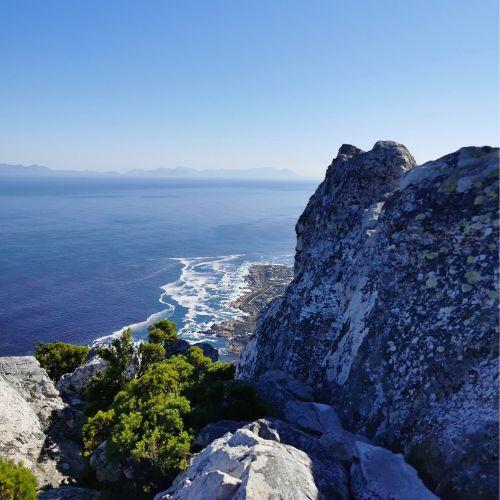
Seven mini-stories about our Kogelberg heritage
Heritage is all around us in the Kogelberg Biosphere. Sometimes it’s easy to see: the old wagon tracks captured in stone, or a path that has been walked for generations.
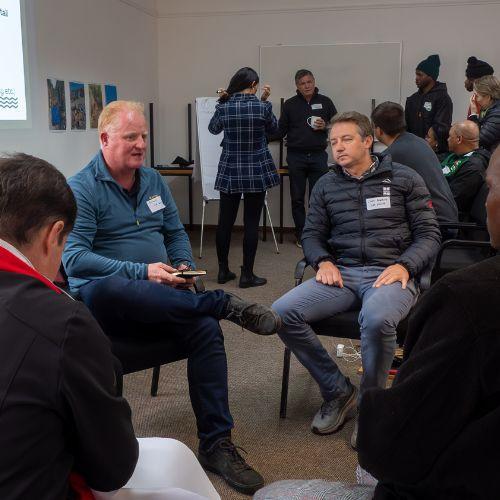
Grabouw comes together to tackle river pollution
Citizen science findings are helping build a clearer picture of waste and water quality challenges in Grabouw – and bringing the community together to find solutions.
Donate
We are a not-for-profit company and a public benefit organisation. All funds raised therefore go to meeting our motto: Nature for Life.
We can provide 18A tax exemption certificates to donors.
For more information, contact admin@kogelbergbiosphere.org.za
Biosphere Living
Become a Kogelberg Biosphere member – and enjoy benefits specially designed to assist you and/or your business.
You can take the next step, to become even more involved in the Kogelberg Biosphere.
And remember to include us in your social media posts, by using the hashtag: #BiosphereLiving.