
The living waters of South Africa’s Kogelberg

By Madelein Wolfaardt
As I drive along the narrow, winding road with open windows, the salty ocean breeze whipping through my hair and the coastal fynbos scent filling the car, I can breathe. I’ve driven this route countless times and still feel like a wide-eyed traveller at every curve, as if the mountains and sea are revealing their secrets just for me. The R44 coast drive between Gordon’s Bay and Kleinmond is one of the most scenic routes in South Africa, where you can marvel at the Kogelberg Biosphere’s beauty.
This paradise, South Africa’s first biosphere, stretches from Gordon’s Bay to the Bot River estuary, reaching inland to Grabouw and the Groenland Mountain. It’s a stunning place teeming with life on land and beneath the waves.
A hidden paradise below
Beneath the surface lies a liquid jewel box, where nature keeps its treasures. I’ve travelled and dived in many places in South Africa and the world. And I’ve witnessed why this ocean stretch is extraordinary – it’s home to over 3500 marine species found nowhere else.
A remarkable phenomenon occurs here, where the cold Benguela Current of the Atlantic Ocean meets the warm Agulhas Current of the Indian Ocean. The mixing of these contrasting waters – cold and nutrient-rich meeting warm and tropical – creates unique conditions found nowhere else on Earth.

Occasional deep water upwellings bring clean blue water with 15-metre visibility, amazing for this area. Seeing these reefs in this visibility is like diving in the dark and having someone switch on the light.
These upwellings are nature’s feeding system, bringing nutrients that sustain our kelp forests and reefs. They also cause rapid algal bloom growth, turning the water a murky green most days. But that’s part of the diving experience here.
Spectacular diving
The mountain dips its toes into the ocean, creating a rocky reef. Aside from the kelp forests, divers discover an underwater paradise with sea fan forests, plus various marine animals, big and small.
Many dive sites along this coastline are accessible from the shore but hard to reach with heavy gear. Most are best accessed by boat. We dive the whole Gordon’s Bay to Rooi Els coastline.
Underwater features mirror the above-water topography. When the water is calm, there are small caves, overhangs, swim-throughs to explore, and large pinnacles too. It’s an interesting and colourful landscape. Some fascinating animals we’ve seen here are sunfish (Mola-mola), massive short-tail stingrays casting a shadow due to their size, and large root-mouthed and barrel jellyfish.

Left: Longsnout pipefish (Syngnathus temminckii). Middle: Barrel Jellies (Genus Rhizostoma). Right: A small Common Octopus (Octopus vulgaris)
We often see seals intrigued by the bubbling creatures in their underwater playground. My favourite species are octopus, cuttlefish, pipefish, blennies and nudibranchs (colourful shell-less sea slugs).


Above: Gasflame nudibranch (Bonisa nakaza) endemic to the South African coast
Left: Red-spotted Nudibranch (Goniobranchus heatherae). Middle: Looseskin Blenny (Chalaroderma capito). Right: Iridescent Nudibranch (Notobryon thompsoni)
On a recent dive, we encountered large schools of fish moving like liquid mercury. There were so many that I couldn’t fit them into my wide-angle lens. Their silvery bodies were lit up by my strobes. They schooled toward us throughout the dive, enveloping me in a fish tornado. An unforgettable experience.

Life above the waves
While out on the boat, we encounter whales spouting or breaching in season or seals eating an octopus. It’s quite a sight as they thrash it on the water surface trying to break it apart.
Recently, we have seen Cape clawless otters playing in the shallows or nibbling on crabs or fish near Gordon’s Bay and Betty’s Bay. They likely stay when they live near healthy wetlands or Marine Protected Areas (MPAs). But even in these spots, there aren’t many of them. They’re considered “Near Threatened”, and urban development and pollution continue to put them at risk.
Meeting a super pod of dolphins is exhilarating. They often number in hundreds or thousands, forming when smaller pods join. Soon they’re around the boat as far as you can see. Leaping and playing, so close it feels like you can touch them. These interactions leave you speechless.

Above: Common dolphins (Delphinus delphis) breaching next to the boat
A changing seascape: Then and now
I’ve seen marine life change significantly over the years.
The great white sharks that once dominated these waters have largely disappeared. In their absence, Cape fur seals have moved in. Their numbers exploded by 520% between 2009 and 2022 (Frontiers in Marine Science, 2025). The most dramatic increase in sightings occurred after 2016, coinciding with the white sharks’ disappearance from False Bay. This shift in predator-prey balance has impacted the ecosystem. The booming seal population pressures local fish stocks. Overexploitation has brought abalone populations close to collapse, threatening these ancient molluscs and the reef ecosystem they maintain. They control algae growth to balance reef communities as grazing herbivores. While hiking during clean-ups at viewpoints next to the R44, we found heaps of discarded abalone shells. These heaps are silent testimony to the ongoing poaching crisis disrupting this ecological balance. The positive impact of Marine Protected Areas is evident. For example, the Betty’s Bay MPA acts as a crucial refuge for many marine species, including the Critically Endangered African penguin, cormorants, depleted abalone and endemic sharks.
These changes have strengthened my resolve to document this underwater world. Photography plays a crucial role in conservation by raising awareness and contributing to research projects like those on iNaturalist.

Above: Silhouette of a scuba diver exploring the reef at Steenbras River mouth
Through my lens
Since 2013, I’ve spent countless hours diving here and mastering underwater photography. Success requires more than technical skills; it demands patience and resilience. The visibility might drop like a curtain, the cold might bite like winter’s teeth, and the surge might toss us about like leaves in the wind, but these challenges have shaped me into a better photographer and mentor. Those who brave these conditions will tell you it’s rewarding.
Teaching underwater photography is about helping people overcome fears, build confidence and connect with nature in a profound way. My goal is to inspire a love for the ocean. We protect what we appreciate and love.
You might never dive these waters (though I’d highly recommend it!), but I hope you experience the magic of this place through my photographs.
Closing thoughts
After another dive, I pack up my camera, exhaustion and exhilaration wash over me. The same feeling I get driving this coastal road – a deep connection to something bigger. Whether I’m capturing tiny nudibranchs in murky waters or watching seals dance around our boat, each visit reveals another secret of the Kogelberg’s underwater world. This place has been my teacher, playground and sanctuary for over a decade. Through my lens, I hope to share not just the images, but the wonder that keeps drawing me back to these waters, dive after dive. Because sometimes the most precious treasures lie just beneath the surface, waiting for those willing to dive in.

Madelein Wolfaardt is an underwater photographer and co-owner of Just Africa Scuba.
For more: www.madeleinwolf.co.za
Instagram: @sealife_madeleinwolf

LATEST NEWS
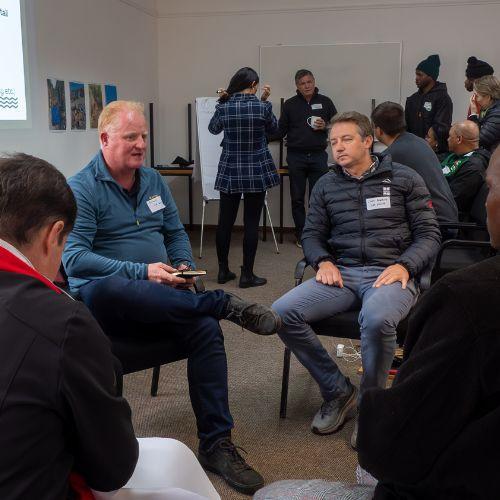
Grabouw comes together to tackle river pollution
Citizen science findings are helping build a clearer picture of waste and water quality challenges in Grabouw – and bringing the community together to find solutions.
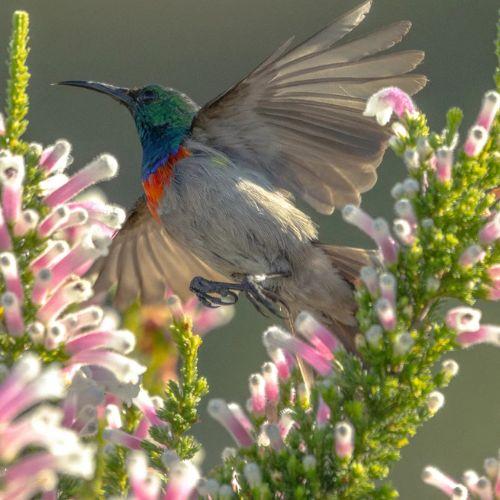
World Photography Day: Behind the lens with Danie Volschenk
If you follow the Kogelberg Biosphere on social media, chances are you’ve already seen the work of photographer Danie Volschenk.
Donate
We are a not-for-profit company and a public benefit organisation. All funds raised therefore go to meeting our motto: Nature for Life.
We can provide 18A tax exemption certificates to donors.
For more information, contact admin@kogelbergbiosphere.org.za
Biosphere Living
Become a Kogelberg Biosphere member – and enjoy benefits specially designed to assist you and/or your business.
You can take the next step, to become even more involved in the Kogelberg Biosphere.
And remember to include us in your social media posts, by using the hashtag: #BiosphereLiving.